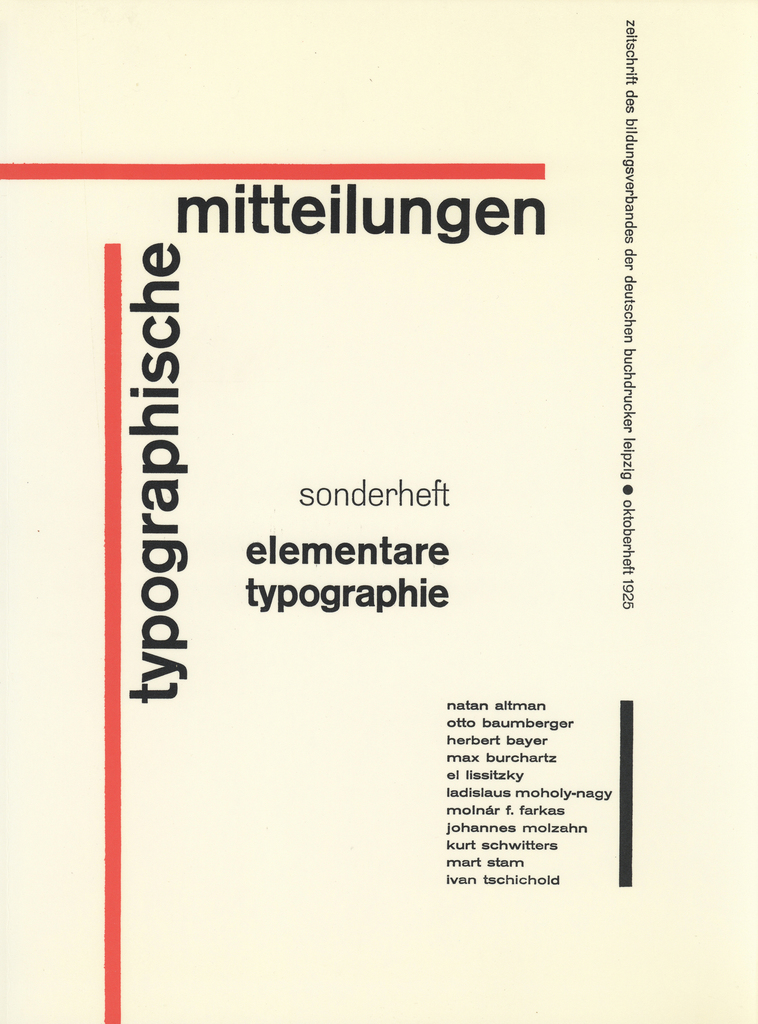
Jan Tschichold
Germany (1902—1974)The son of a sign painter, Jan Tschichold developed an early fascination with typography, although his family initially encouraged him to pursue a career in teaching. He began by teaching illustration and went on to work as a graphic designer and lettering artist, drawing particular inspiration from Rudolf Koch before discovering the principles of the Bauhaus at its 1923 exhibition in Weimar. In 1928 he published Die Neue Typographie, his first major book and a seminal treatise that set out the principles of modern graphic design and typography. Following the political changes in Germany, he emigrated to Switzerland in 1933, gradually developing a more classical approach to typography. In 1947 he moved to London to work for Penguin Books, undertaking a comprehensive reform of the publisher’s typographic standards and establishing new guidelines for the design and production of its books, including the Penguin device.